
The Web: A Better Way to Understand Reality (and Ourselves)
The dangerous myth of the independent self

Krista Tippett asks a great question in some of her interviews. She asks her guests what most gives them despair and what most gives them hope. Having never been a guest on On Being, she hasn’t asked me (yet), but I’ll answer anyway, because it’s my Substack.
What most gives me despair is that people assume they have an independent self. What most gives me hope is that people are increasingly growing to despair that assumption.
The Buddhists are all over this. There are two parallel concepts of anattā and paṭiccasamuppāda. Anattā is often translated as “not-self.” I’ve seen it translated as “no-self,” but not-self is far better IMO (I’ll elaborate later). Paṭiccasamuppāda is “dependent arising.” I’ve also seen “dependent origination” at least as often, but again, I prefer the former. Everything arises, more or less, but it’s often hard to identify the true origin of most phenomena.
Considered together, these two concepts elegantly describe the reality of how we share our lives with each other and everything. The source of my despair is that humans largely ignore this truth - not in a strictly Buddhist context, but in a real sense.
Identity
Anattā means that there is no unchanging, permanent self. For that matter, there is no thing or phenomenon that has any essence, or permanent element of being, at all. The easiest way to wrap our heads around this is to think about ourselves. Am I my body? The body is just an aggregation of constantly changing processes. Put more simply, if I eat a hot dog, that hot dog becomes part of my body. Am I now my body plus my hot dog?
Then there’s aging. Am I 47 year-old me, or 27 year-old me? Let’s take it all the way down to the cellular level. There’s a popular notion that our bodies completely regenerate over the course of seven years, but that’s an over-simplification. In reality there are some neurons and heart cells that often do last a lifetime. But the reality is that billions of our cells die and are replaced every day. I don’t know, maybe our essence is neurons and heart cells. But that doesn’t make much sense to me.
Am I my brain? Having visited there often, I certainly hope not. I seem to have almost no control over what pops in there. I meditate often, so I’ve gotten pretty good - or at least a lot better - at recognizing my thoughts as “not me,” which helps me to not identify with them. But I’ve made no progress whatsoever in controlling whether thoughts occur in the first place.
I could keep going with this thought exercise - Buddhist theologians have for millennia - but what we inevitably land on is that we really can’t locate an essential self. This is as unsettling as it is liberating. So much of the suffering we experience is a result of our evolutionary drive to preserve our identity. This drive is rooted in both genetic survival - via kin selection - and social cohesion. Our ancestors survived and passed on genes to the next generation by belonging to a group and keeping their environmental conditions as stable as possible. Over hundreds of thousands of years, this results in us over-identifying with our sense of self, family, and tribe in ways that are no longer useful in contemporary, pluralistic, global societies. So, it would stand to reason that extricating ourselves from our sense of self would make us happier and the world better.
Interdependence
Paṭiccasamuppāda means that everything that exists or happens depends on other things happening or existing. Everything you see, say, do, eat, and experience couldn’t have happened without other things occurring first. This is Buddhism’s version of causality - not so much “this thing happened, then this thing happened,” but “this thing happened because of everything else that happened before.”
Going further, nothing exists outside of how one perceives it. One cliché that demonstrates this is the idea that you and I can’t be sure we see the color red the same way. Sure, we both know that it’s red because we’ve been taught that things that look like that are red, but we can’t be sure that we experience red in exactly the same way. But dependent arising is much deeper than that.
Think of the now famous Butterfly Effect. This phrase was popularized by meteorologist Edward Lorenz in the 1960s, who used the metaphor that a butterfly flapping its wings in Brazil could set off a tornado in Texas. This effect is often misunderstood to mean that butterflies cause tornadoes. What Lorenz meant was that, in complex, inter-connected systems, tiny changes in initial conditions can produce dramatically different outcomes over time.
We are all embedded in countless complex, inter-connected systems: food chains, weather, climate, ecologies, economies, political systems, societies, communities, families… you name it. Every time we “flap our wings,” we “cause tornadoes” within our systems. Every choice we make, word we say, and action we take ripples through those systems in ways we can imagine and some we couldn’t possibly.
Lest you think this is a concept relegated to Buddhist scripture, interdependence is a core tenet of Catholic belief as well. In 1 Corinthians, Paul details what has come to be known as the Body of Christ, which is the belief that all members of the Church are united as one spiritual organism with Jesus Christ as the head.
For as the body is one, and hath many members, and all the members of that one body, being many, are one body: so also is Christ. For by one Spirit are we all baptized into one body, whether we be Jews or Gentiles, whether we be bond or free; and have been all made to drink into one Spirit. For the body is not one member, but many.
I choose to think that Paul is not writing so much of the Church specifically, but of everybody. True, he writes of being “baptized into one body,” but immediately afterwards he clarifies: “whether we be Jews or Gentiles.” Those may or may not be ethnic delineations to Paul, but I don’t read them that way. Paul is reminding us that, regardless of what we call ourselves, we are all part of one Body, inextricably and inexorably linked to each other in both obvious and unfathomable ways.
Why Do I Care So Much?
Good question. I care for three reasons: 1) the reality of interdependence is really important; 2) we mostly forget this reality; 3) this forgetting is the cause for most unnecessary human suffering.
Let’s be real - obviously we have a practical self. Most thoughtful Buddhists would tell you the same thing. I’m not you, and vice versa, and neither of us are my dog. This is why I prefer “not-self” to “no-self.” To say we have no self may or may not hold some kind of metaphysical truth, but it doesn’t jibe with our lived experience. We have to negotiate with our selves and others’ selves throughout the day to buy food, answer texts, pay taxes, and go to church. Not-self is more accurate because, regardless how we try to conceptualize our selves, we can reliably answer that conceptualization is “not self.”
The point is that our selves are not anything permanent or essential, nor do they exist outside the vast web of interdependence. Our problems mostly come about when we think that they do. We cling to our sense of self through our various superficial identities - nationality, race, religion, political ideology, social class, etc. But none of these are our selves. They’re merely characteristics of an impermanent, non-essential self. Clinging to them reinforces our evolutionary instincts of separateness, tribalism, and unbridled self-interest.
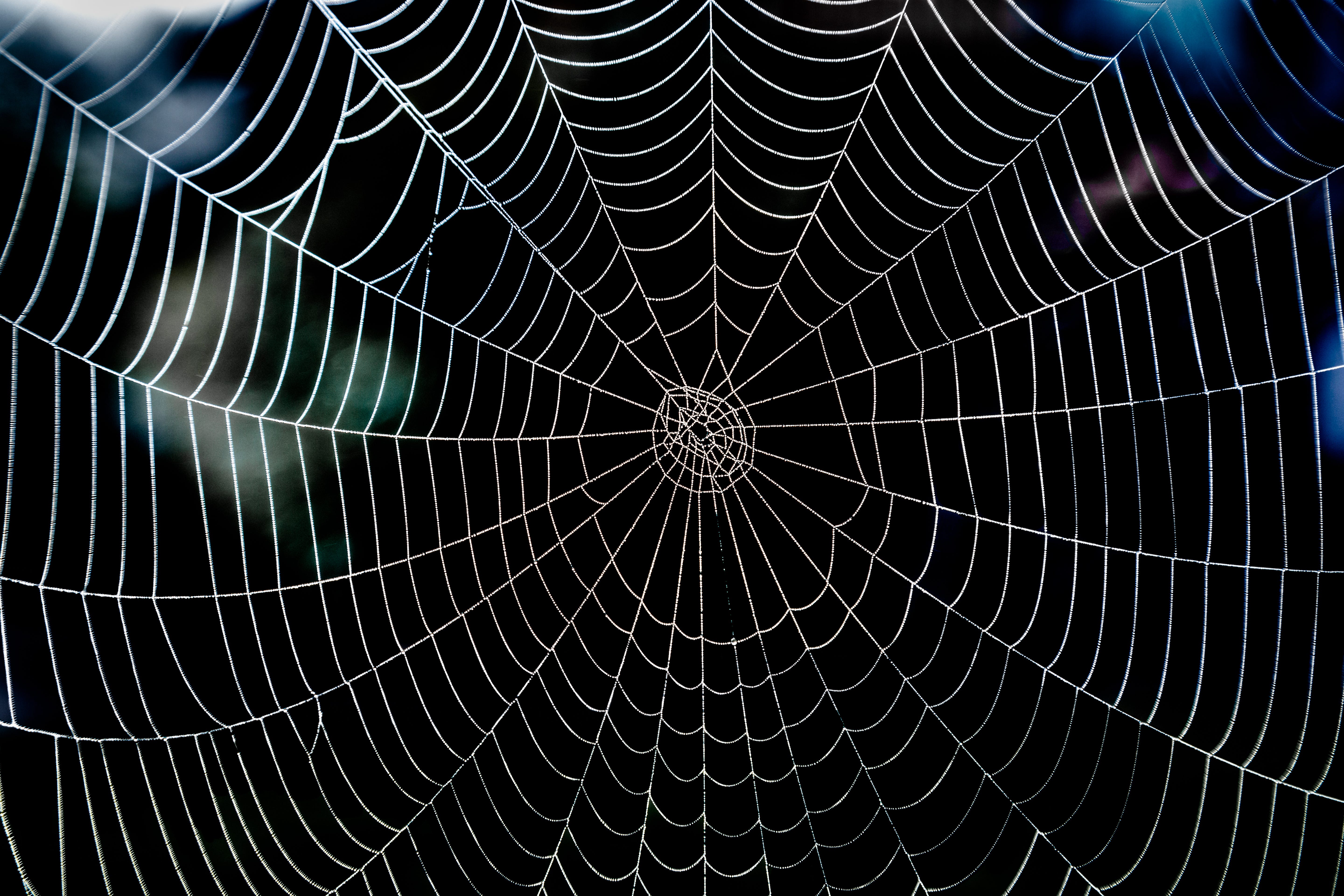
This is why I read Paul’s text as more inclusive than just followers of Christ. Because if your concept of God is grounded in the interdependence of all humanity - as mine is - then we are all, in a manner of speaking, believers. I call this the Web (I’m working on a book project around this idea, stay tuned). Even if you hermitize yourself in an effort to evade paṭiccasamuppāda/Body of Christ, that itself is a choice that has profound impacts on the Web. Besides, you still have to eat, drink, and breathe, and all of that affects the Web as well. Face it - you can’t escape the Web.
So how does this separateness, tribalism, and unbridled self-interest manifest? Toxic partisanship, -isms of every kind, ideological purity, cancel culture, political violence, legislative logjam, civic dysfunction, etc. When our democratic systems cease to function because of our unhealthy relationship with the Web, authoritarians, demagogues, and snake oil salesmen inevitably step into fill the gaps. These agents make empty promises that they alone can save us from our selves. Terrified of not belonging to something bigger than our selves, we desperately take the bait.
Welcome to 2026.
If Not Identity, Then What?
This environment is a scary place to have no self. If I don’t have my identities, I’m alone, flailing against systems that don’t serve me or others. Systems that perpetuate ecological degradation. Systems that don’t provide appropriate constraints on markets. Systems that amplify the loudest voices, those that rely on fear and anger to be heard. Systems that bind us to chains of consumerism and the mindless pursuit of shallow self-interest.
In such environments, it’s crucial to remember that we do in fact belong to something bigger than our selves. Call it Paṭiccasamuppāda. Call it the Body of Christ. Call it God. Call it the Web. That’s not what’s important. What’s important is that it speaks to you in concrete enough terms that it actually makes a meaningful difference in how you show up in the world.
For me, those terms are part of a multi-layered framework that I won’t detail in this article (again, book in process). But indispensable to that framework is the orderly practice of religion within established traditions and communities. Just as important, that practice is tethered to my understanding of empirical reality, meaning that I don’t allow my religion or scientific understanding to contradict.
This work is complex, evolving, and highly personal. But it is essential. Believing in God or the Web alone is insufficient. The world is littered with believers who fail to live according to their beliefs. We need tradition, systemized practice, and community.
My way is not the way. It’s my way. But we all need to find our way. Otherwise, we will continue to succumb to the worst products of our evolutionary psychology. One glance at the world in which we live is enough to convince us that path is all too real. It’s also unacceptable.